Pages

Thursday, June 21, 2012

Hollow World: Torn Asunder


The Sundering

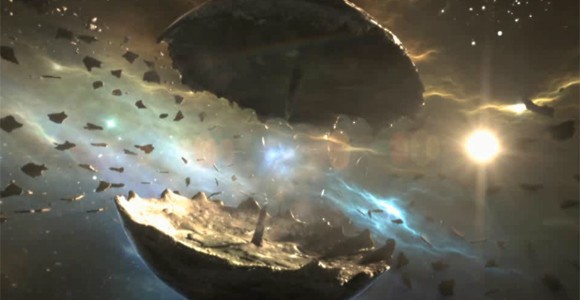
Our beautiful world was torn in half.

Once, the world was calm, peaceful, fully known. We had no questions about the world we lived in--certainly, philosophers waxed eloquent about the possibilities of afterlife, the old superstitious concepts of an Outworld, full of daemons, but it was more an academic exercise. In the last two years, though, we have realised how wrong we were to ignore those wise ones.

Though a small world it was, its smallness gave us safety, security, and peace. These last two years have ravaged our world: the climate now varies two or three times a year, there are regions of the world that are always cold, farms no longer produce crops year round... Worst of all, though, are the phantasmagorical phenomenae. The gulf of void that separates the Lower World and the Upper World is, we fear, a gateway from the Outworld.

Strange things happen daily. People disappear, bodies are found sacrificed on strange altars, animals scatter when nothing is present, birds take flight in strange new patterns, and some even claim they see blood in the sky. These are read as omens by most people; they consider them signs of pending doom from Outworld. Meanwhile, others claim that the sundering of the world is a time of excitement, of opportunity for exploration, redemption, salvation.


Art shamelessly borrowed from a Google Image search. I think maybe it's from the MMO, Aion.


Saturday, June 16, 2012

Review: Zogorion, Lord of the HIppogriffs

No spoilers here.

Last night, I had the opportunity to run a pickup game of LotFP for some lovely folks on G+. I had been itching for a chance to run +Jason Sholtis's little micro-module, Zogorion: Lord of the Hippogriffs, and decided this was the perfect chance.

The Good: Brevity! This micro-module can be read in about 15-20 minutes. That's really all the prep you need, unless you want to add some more customized hooks, or reskin something.
Jason injected just enough character and personality into Zog, the main NPC, to make him a fantastically interesting character, but left a lot of the little details up to the Referee to nit pick or hand wave.
This is in no way a railroady module. You can lay the hook(s) and see how the players take them. The location described is openly laid out in the module so that a Referee can allow the players to approach the challenge however they wish. Within there are even several major items that could be drawing factors or goals for PCs besides the obvious interactions with Zog.

The Bad: I honestly can't say much about it that isn't good. Maybe the fact that he hasn't written another like this yet?
I suppose there are a few little details left out regarding Zog's lair. They are easily filled in by a good Referee, of course, so it's not a real problem. I can't lay out the details here without spoilers, so I'll leave it at that.

The Ugly: Nothing. Seriously, I can't find anything that I just scoffed at. This was easy to read, easy to tweak and tailor, and a blast to run.

Where can you acquire such a delightful module, you ask? Why at Jason's blog, of course: http://roll1d12.blogspot.com/

Thursday, June 14, 2012

How Big is Your Sandbox? aka Player Decision Leeway

I started a discussion last night on G+, where I simply asked the question "how big is your sandbox?" I also clarified that I wasn't referring to geography.
Some great responses were posted, but no one really mined the vein I was thinking, because I wasn't very specific.

How much leeway or freedom do your players have in the sandbox?

I have recently decided to think of sandboxes as varying in size. Here is a rough breakdown:

  • Infinite breadth of options
    • In this type of sandbox, players are given a literal "anything goes" card. The DM either has invested a ton of time in preparation, or is (like me) relying on his ability to build on the fly.
    • Players are not given any scenario or issue to consider. They are merely placed in a world, given descriptions of that world, and asked "What do you do?"
    • There is no starting point or ending point for adventures in this type of world.
  • Limited breadth of options
    • While the DM may have a world planned (or created on the fly) that can accommodate the "infinite options" type of game, for some reason he or she has chosen to limit the PCs in some way.
    • Examples of this include my recent Savage SciFi game-- I created a world, gave the PCs vast input in its creation, but set up a specific starting scenario. No goals were laid out by me, but there were a few more obvious possible outcomes of the initial scenario. Because I gave the players full freedom at every turn, though, they surprised me at every game session.
    • There is a definite starting point for adventures in this world, which naturally precludes some options, but can help set up a particular style of adventure. No end point is laid out.
  • Railroad with options
    • I think of this as analogous to most RPG video games, like Final Fantasy. While there is freedom to explore the world, level up, pursue side quests, the DM still has a definite "win scenario" in mind (or maybe two or three scenarios.)
    • I hesitate to use the term railroad for this type because it is still not a set in stone type of plot. It is probably much more flexible than the stereotypical railroad.
    • You can think of this type of sandbox as having a line laid in it, showing a start AND end point.
  • Railroad (aka Not a Sandbox)
    • Do I really need to define this one?

Wednesday, June 13, 2012

"Post-Dungeon" People

The other night, while discussing the upcoming game for Monday nights, I had a spark of thought, and wanted to share it. Credit for the spark goes to +Kyrinn S. Eis, though I cannot say if the thoughts I present below are in line with hers.

The term Kyrinn used was "a post-dungeon person." I like this term, it has a nice ring to it, and gets to the point: a post-dungeon person is someone who does not play RPGs thinking that a dungeon crawl is the only type of game out there, or (more likely) they avoid dungeon crawls altogether.

My disclaimer here is that, I think, everyone enjoys a crawl every now and then. I probably don't crawl as often as some of the old grognards, but I do love a good dungeon crawl. Emphasis on "good." The other thing about me is that I enjoy more types of games than a dungeon crawl.

So what's my point? Well, I think a key distinction between gamers should be less about "old school" and "new school" styles, and more about what game we are playing.
I often hear haters, on all sides of every fence, complaining that "such and such just isn't D&D" or "<xyz> ruins <abc> about the game." What if, instead, we recognized that we are playing different games with the same name? D&D, and all RPGs, really, are usually more versatile than we give them credit for being. Yes, the original D&D games were written for dungeon crawls and wilderness hex crawls. That means that "dungeon crawl" and "hexploration" are the games you are playing--not D&D! (Rather, it's more important to identify what game you are playing outside of the name of the rule set.)

This is a big part of why I try to name every campaign or game I run, even if that is a name just for me. It allows me to separate MY game from the rules set I"m using to facilitate the game. So, if you choose to only play a "traditional" or "old school" game, that's great. Use D&D, use a retroclone, use True20--whatever you want. But keep in mind that no matter what rules you use, someone else is using those same books to accomplish a different goal; they are trying to play a different game.


My point here is not to cause dissent or to upset and offend. These are thoughts I have, and you are free to respond to help me reshape them, and I am free to keep/discard/change them during the discussion.

Monday, June 11, 2012

The World Within


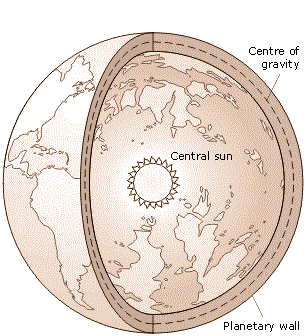
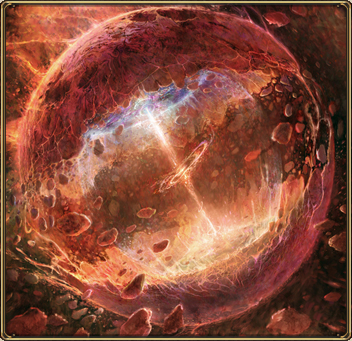
Limits, boundaries, borders, barriers, limits--all can be summed up in the word definition. Our world is well defined: centuries ago, explorers ventured forth from the City and found the ends of the world, the curve of the sphere, creating the pocket that we live within.
The red magma sphere we call the sun spins in the centre of our world, and we are warmed by its glow. We know when it will shine, and when it will dim. We know how much light, darkness, heat, cold, wind, and water will be available to us next season and next year.

This world is finite.

Though we have an abundance of resources (food, metals, water, animals, plants,) we are bound and our hands tied by the limit of space. The ground is impenetrable, no matter how far we dig, and no matter how ardently we wish for more, we all know that some day soon we will be a people too numerous to dwell within this pocket world.

- from the pen of the Grand Master Librarian, Tykus IV